barchetta
2025
3003-H14 .063″ aluminum sheet
galvanized steel wire
Rhino3d
Grasshopper3d
Kangaroo3d physics engine
(Scroll down for image gallery)
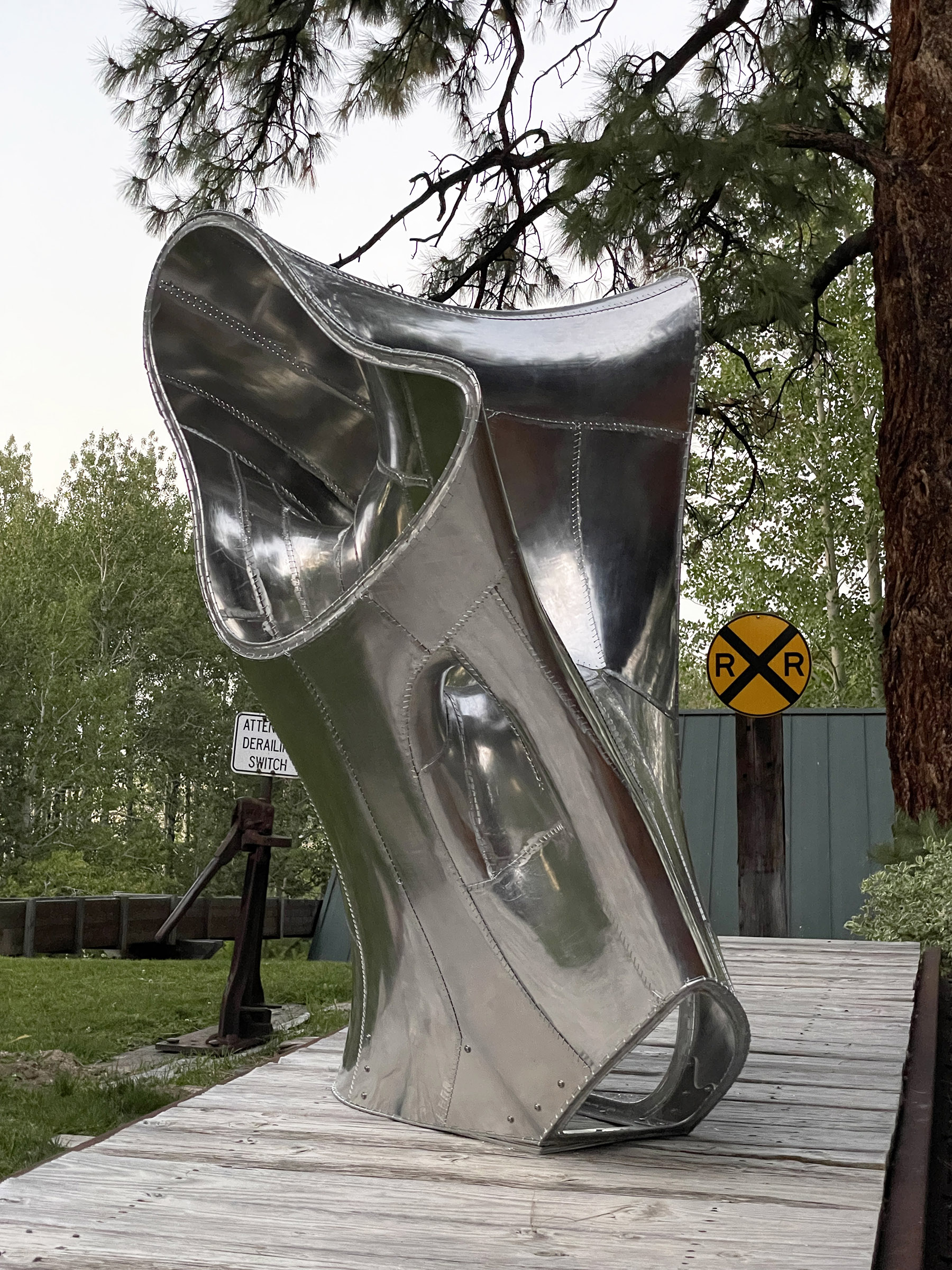
This sculpture was constructed during a one-month artist residency during the summer of 2025 at the Buffalo Creek Art Center in Gardnerville, Nevada. It is on permanent exhibition on the Art Center grounds. It explores themes of interiority, aperture, complex topologies, and gendered expectations of form and craft.
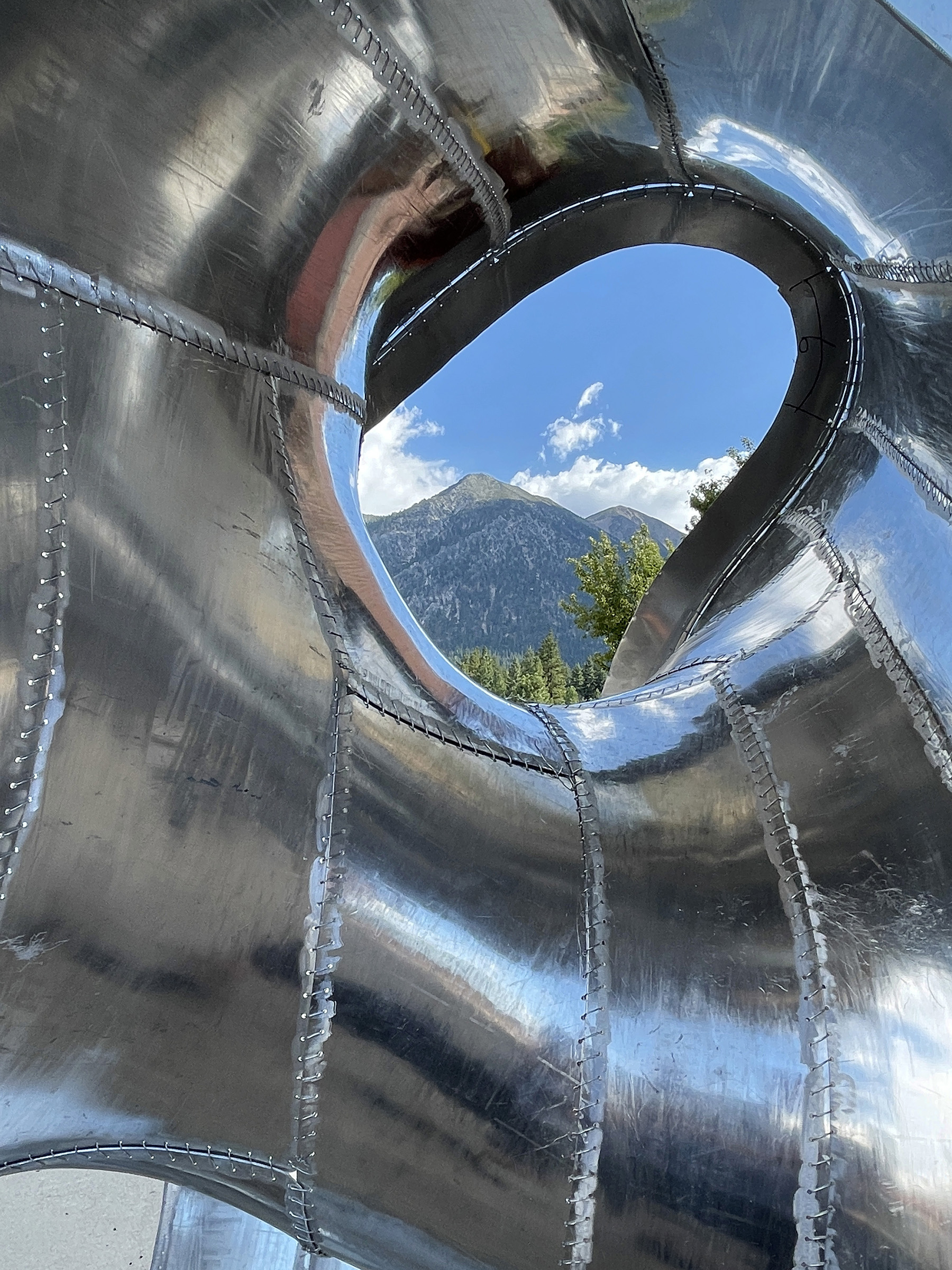
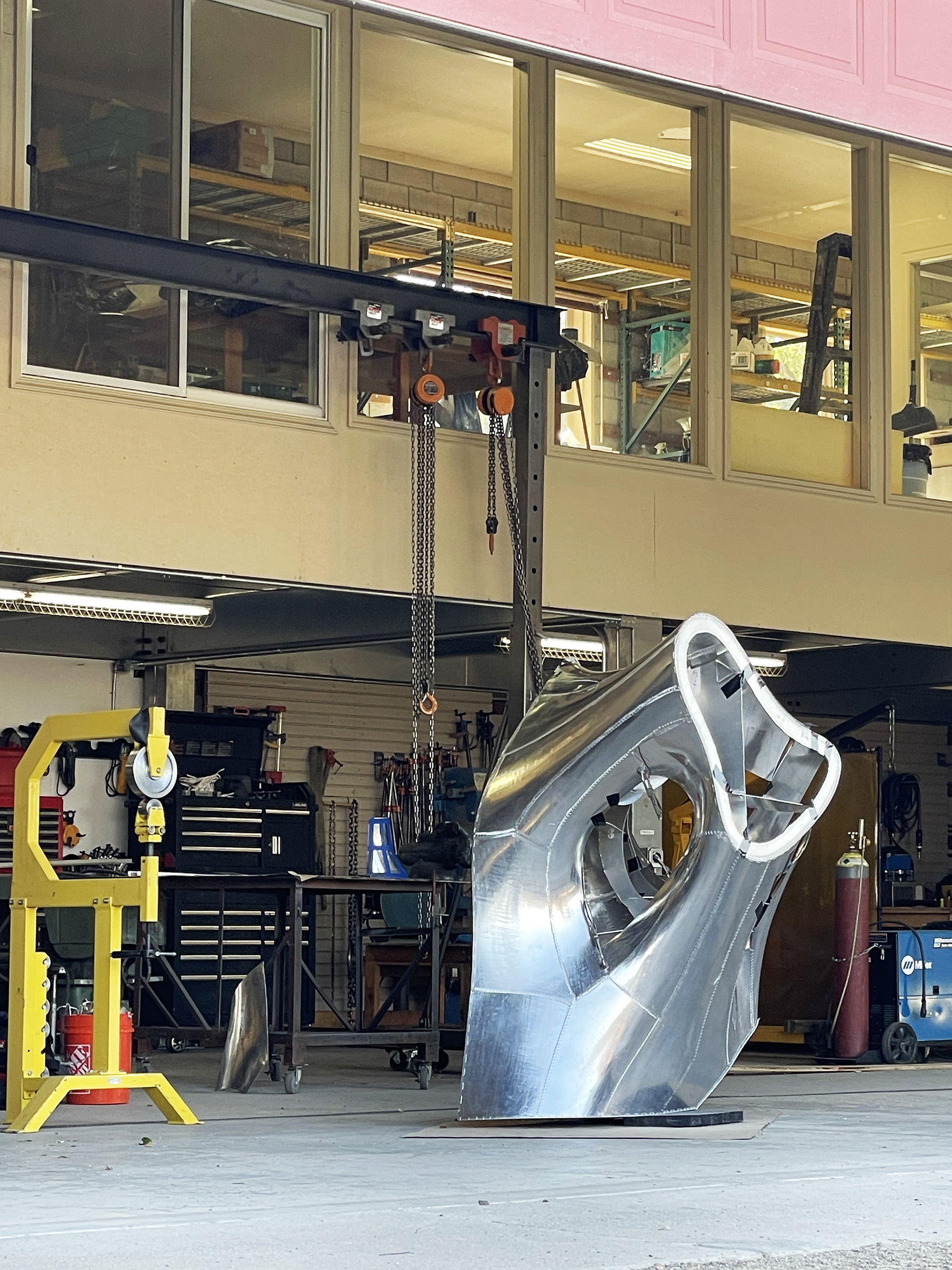
It is constructed of 33 individual panels that are hand-shaped from 1/16” thick aluminum sheet material. Each panel has complex double curved surface geometries. Each is saddle-shaped, with the curvatures going in opposing directions (known as a reverse curve, or anticlastic). The edges of the panels overlap slightly and are joined by stitching together with thin steel wire. Thousands of holes were drilled along the panel edges to weave the wire through, pulling the seams tightly together. The holes are large enough to let light through, dematerializing the joint, and letting it read as voids instead of support.
There is no internal framework or armature. The shape of the panelized assembly gives strength and rigidity, so it behaves like a thin shell structure. The overall geometry of the sculpture was generated computationally, using a physics engine to simulate a stretchy material being pulled between a series of boundary edges.
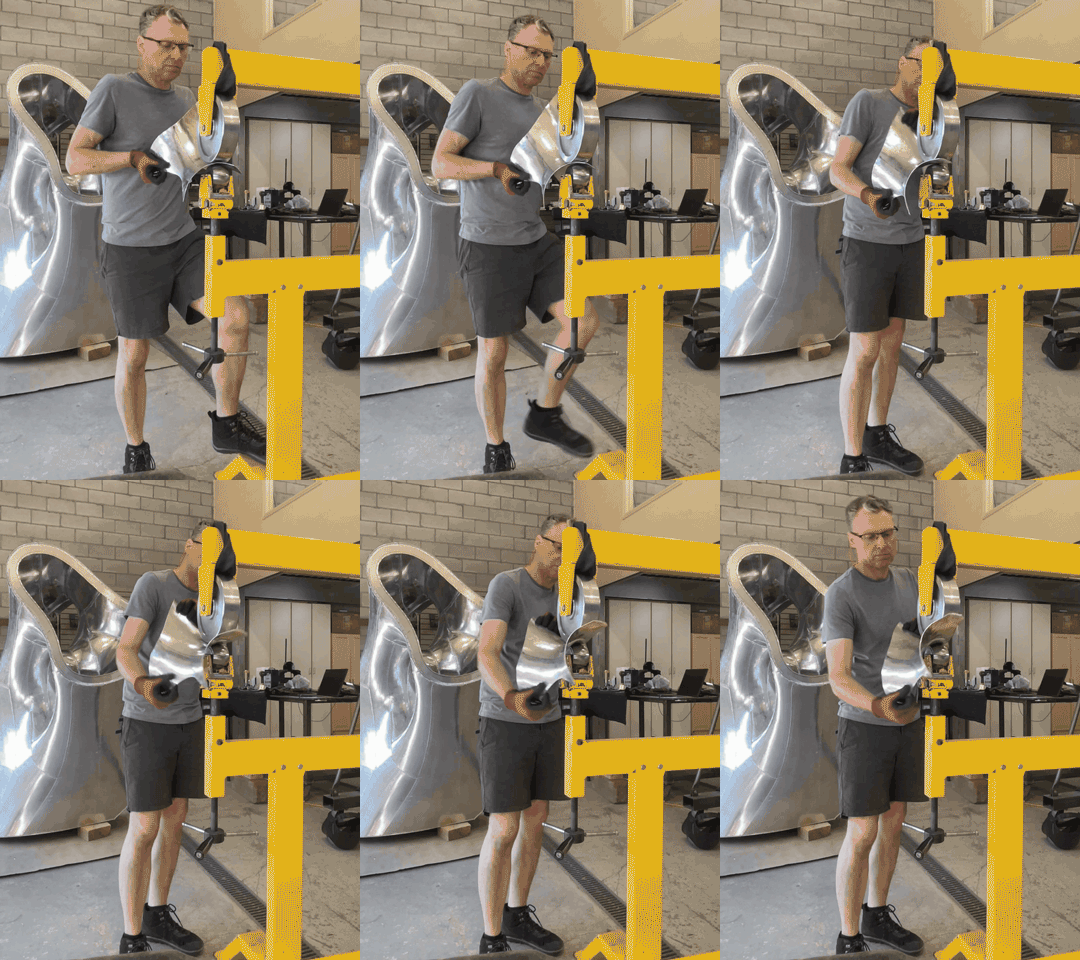
Each panel was shaped using a tool known as an English wheel. The sheet material is manually passed between two rollers, which put pressure on the face of the aluminum. That pressure slightly thins the material while simultaneously increasing its surface area. That process is known as stretching, and the increased area begins to form curvatures. Conversely, additional tools were used to do the opposite action: the face of the metal is gathered together, reducing its surface area but increasing its thickness. This is known as shrinking. Applying each action, shrinking and stretching, in the correct locations results in generating the desired form in the panel.
Knowing where to shrink and stretch is a skill that is developed through extensive craft training and practice. To aid in this process, I developed a computational method that creates a color map to illustrate location and magnitude of shrinking or stretching. Every curved panel can be formed either through only stretching, only shrinking, or a combination of both. This color map allows visualizing each of those strategies along a continuum.
This mapping tool is also used to generate the shape and size of the two-dimensional pattern that is initially cut from flat sheet material. An animation in the slideshow below illustrates this shrink/stretch mapping, as well as the 2D pattern that is generated.